Why does it matter whether an attorney speaks Spanish or Portuguese in Latin America matters?+
Most critical witnesses in a Latin America investigation speak only Spanish or Portuguese. Documents are in those languages. Communications with local counsel, regulators, and courts happen in those languages. When a U.S. attorney needs an interpreter for every interaction, the attorney is not actually conducting the investigation; the interpreter is filtering it. Information is lost; nuance is lost; the attorney cannot evaluate a witness in real time. The firm's attorneys conduct investigations natively in Spanish, and Mr. Fridman reads Portuguese, because the quality of the work depends on it.
Does the firm handle cross-border matters in Colombia, Chile, Panama, and other countries in the region?+
Yes. While Brazil, Mexico, and Argentina generate the largest volume of cross-border U.S. enforcement matters, the firm handles matters across the full region. Colombia is an active FCPA enforcement jurisdiction; major investigations involving the telecommunications, construction, and energy sectors have arisen from Colombian operations. Chile and Panama are frequent counterparties in § 1782 proceedings, extradition matters, and asset recovery actions. The firm's active matters include antitrust proceedings involving Panama and Jamaica, § 1782 proceedings related to Mexican and Singaporean proceedings, and extradition matters from Argentina. The Latin America practice is not country-specific. It is built on the ability to navigate cross-border matters across the hemisphere, in coordination with strong local counsel in each jurisdiction, and conducted in Spanish by attorneys who practice in that language every day.
What is Section 1782 discovery and how does it help a foreign proceeding?+
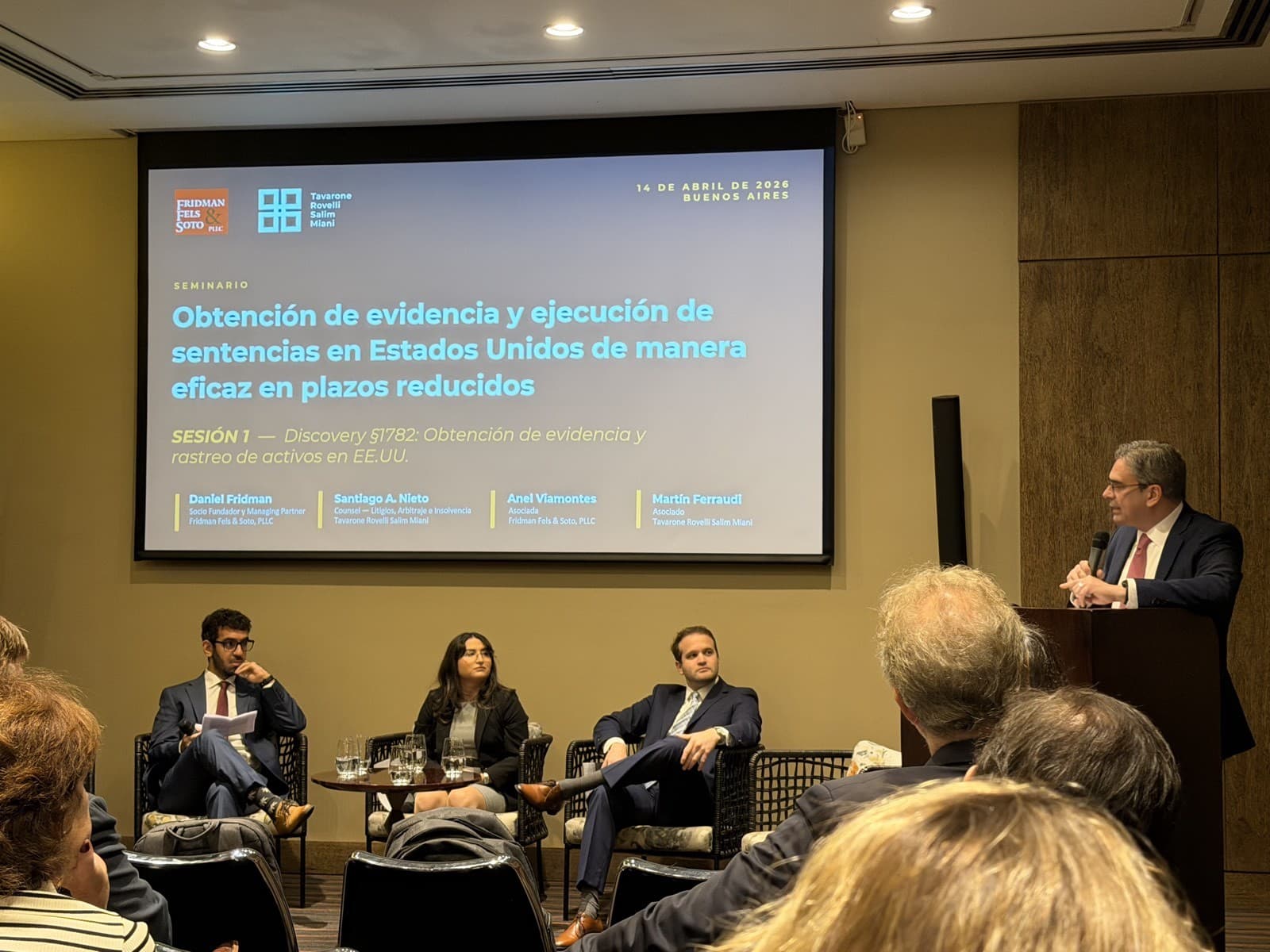
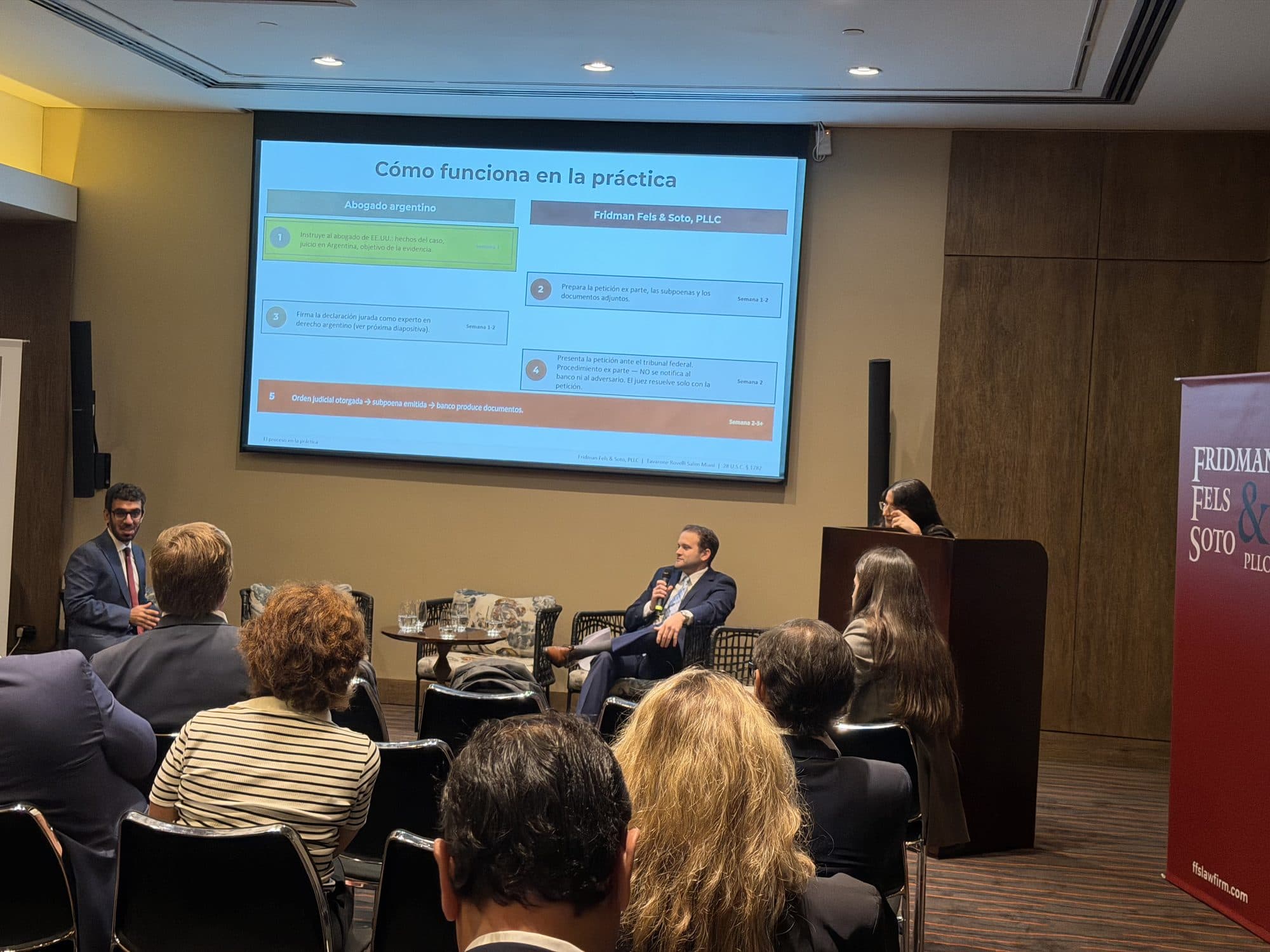
Section 1782 of Title 28 lets a party to a proceeding outside the United States apply to a U.S. federal court for discovery, documents and testimony, from people and entities located in the U.S. It is one of the most powerful tools available to Latin American litigants because U.S.-style discovery is far broader than what most civil-law systems allow, and it reaches U.S. banks, subsidiaries, and individuals. The firm litigates Section 1782 proceedings on both sides: obtaining discovery for use abroad and defending clients against overbroad applications.
Can a foreign court judgment be enforced against assets in the United States?+
Generally yes, through a recognition process. Florida and most U.S. states have statutes under which a foreign country's money judgment can be recognized by a U.S. court and then enforced like a domestic judgment, subject to defenses such as lack of due process or jurisdiction in the original proceeding. Recognition is where these cases are won or lost, and pairing it with asset discovery, including Section 1782 and post-judgment tools, is often what converts a paper judgment into an actual recovery.
When should a Latin American company or executive retain U.S. counsel?+
Typical triggers include a subpoena or document request from U.S. authorities; U.S. dollars, U.S. banks, or U.S.-listed securities touching a regional matter; sanctions exposure or an OFAC designation; a Section 1782 application seeking discovery from or about you; extradition risk; and disputes where the counterparty or the assets are in the United States. U.S. enforcement reaches much of Latin American commerce because so much of it clears through U.S. financial infrastructure, and early involvement of U.S. counsel usually expands the available options.